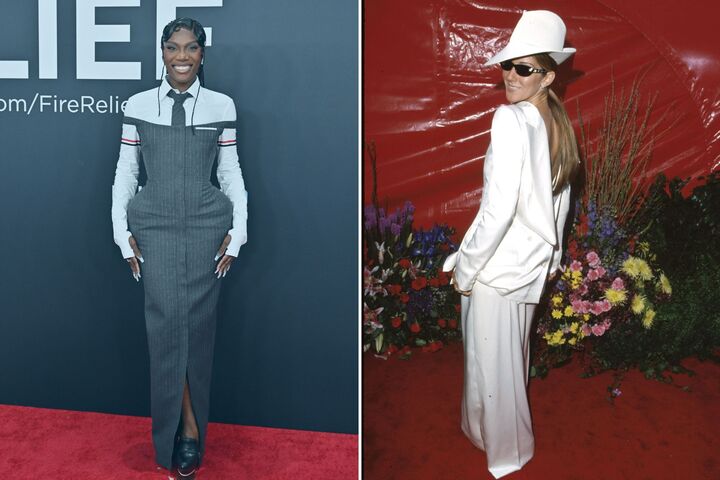
The Met Gala’s theme dropped with its usual fanfare—cryptic, lofty, and open to interpretation. This time, it’s less a directive and more a dare: an ambiguous prompt that’s sent stylists scrambling for meaning. “It’s not about what the dress looks like,” one top stylist confided. “It’s about what it does.” From sheer naked dresses that challenge decency norms to tailored Mona Lisa suits that blur art and identity, the red carpet is set to become a battleground of conceptual fashion.
This year’s theme resists easy definition. It alludes to art, identity, and exposure—both literal and metaphorical. And with no clear visual anchor, stylists aren’t just dressing celebrities. They’re curating arguments, making statements, and betting on which interpretation will dominate the cultural conversation by morning.
Here’s how the fashion insiders are navigating the uncertainty.
Why Ambiguity Is the New Creative Catalyst
Fashion thrives on constraints. Deadlines, fabrics, silhouettes—these force innovation. But this year, the constraint is absence. No period, no movement, no explicit muse. Just implication.
Stylists are treating the vagueness like a Rorschach test. “The lack of rules is the rule,” says Mira Cho, stylist for Florence Pugh and Michaela Coel. “You have to ask: what does it mean to reveal? To conceal? To represent?”
For some, that means revisiting the “naked dress” trend—not as shock value, but as commentary. Think sheer mesh with strategic embroidery, or illusion panels that suggest the body without fully exposing it. The goal isn’t exposure, but exposition: laying bare identity, heritage, or even vulnerability.
Others are leaning into art history, using the theme as an excuse to literalize masterpieces. Enter the “Mona Lisa suit”—a concept already in development at ateliers in Paris and Milan. Not a costume, but a reinterpretation: a structured blazer with her enigmatic gaze woven into the lapel, or a gown where the embroidery shifts expressions under different lighting.
Ambiguity isn’t a problem. It’s the playground.
The Naked Dress Reckoning: Bare Skin or Bold Statement?
The naked dress is nothing new. Think Cher’s Bob Mackie chains, Rihanna’s sheer Adam Selman gown at the 2014 CFDA Awards, or Kim Kardashian’s wet-look Marilyn Monroe recreation. But this year, the trope is being reevaluated.
“It’s not about being naked,” insists stylist Lorenzo Reyes, who dressed Jared Leto as the Pope at a past Met Gala. “It’s about choosing what to reveal—and why.”
The new wave of sheer dressing isn’t about titillation. It’s about control. Celebrities are opting for pieces that mimic skin tone with precision, using custom dye-matched mesh and 3D-printed embellishments that serve as both armor and art.
Three ways stylists are reinventing the naked dress:
- Narrative Sheerness – Panels of transparency that frame tattoos, scars, or cultural symbols. One A-lister is wearing a bodysuit with sheer sections highlighting ancestral tattoos, making visibility an act of heritage.
- Textural Contrast – Combining sheer fabrics with rigid corsetry or metallic overlays to create tension between fragility and strength.
- Color Substitution – Moving beyond nude tones. Think electric blue mesh or crimson illusion panels that reject the idea that "naked" must mean "invisible."
The risk? Misinterpretation. A sheer gown can be seen as daring or desperate, depending on context. That’s why stylists are pairing these looks with strong accessories—a sculptural headpiece, a quote etched into the heel of a shoe—to anchor the message.
The Mona Lisa Effect: When Art Becomes Apparel
Art-inspired fashion isn’t new. Schiaparelli’s surrealist pieces, Gucci’s Renaissance motifs, or even Lady Gaga’s “fame monster” meat dress—all pull from visual culture. But this year, the Mona Lisa has emerged as a surprising muse.
Not the painting itself, but what she represents: mystery, stillness, the power of the unreadable. “She’s the original influencer,” says designer-turned-stylist Elisa Tanaka. “No one knows what she’s thinking. That’s power.”
The “Mona Lisa suit” isn’t a literal copy. It’s a philosophy. Expect:
- Enigmatic tailoring – Asymmetric cuts, hidden pockets with embroidered questions (“Why am I here?”), or lapels that mirror her gaze.
- Smile motifs – Subtle, not literal. A curved seam across the chest, a lipstick stain on a collar, or a brooch shaped like a fading smirk.
- Layered identity – Outfits that change under UV light or with movement, mimicking the way her expression seems to shift.
One stylist revealed a look in development: a black tuxedo with a silk lining printed with Da Vinci’s sketches. When the wearer moves, the sketches become visible—“like thoughts flashing beneath the surface.”
The danger? Looking like a parody. “You don’t want to wear a painting,” warns Tanaka. “You want to wear its vibration.”
How Stylists Are Researching the Unresearchable
With no clear guidelines, stylists are digging deeper than ever. Mood boards include everything from Freudian psychology to AI-generated art.
“We’re not just looking at fashion history,” says Reyes. “We’re looking at philosophy, surveillance theory, even quantum physics—anything that deals with perception and reality.”
Typical research workflow this year:
- Theme deconstruction – Breaking the press release into keywords: reveal, interpret, mirror, reflect, surface, layer.
- Cross-disciplinary inspiration – Pulling references from art, psychology, architecture, and digital culture.
- Client alignment – Matching concept to celebrity persona. A pop star might embrace the “naked truth” angle; an actor might explore duality.
- Atelier collaboration – Working with designers to prototype ideas that respond to the theme without being literal.
- Risk assessment – Will this be seen as profound or pretentious? Stylists are running concepts by cultural consultants and PR teams.
One stylist admitted they hired a semiotics expert to analyze early sketches. “We needed to know: does this say ‘I’m deep’ or ‘I’m trying too hard’?”
The Technology Factor: Smart Fabrics and Hidden Messages
This year’s theme is fertile ground for tech-integrated fashion. With so much emphasis on meaning beneath the surface, stylists are embedding messages—literally.
- Thermochromic fabrics that change color with body heat, revealing hidden text or patterns.
- Conductive embroidery that lights up when touched, symbolizing connection or vulnerability.
- QR code clutches that link to a personal manifesto or digital art piece.
One look in development uses EEG-inspired headwear that visualizes brainwave patterns in real time via LED strands. “It’s the ultimate ‘exposed mind’ statement,” the stylist said.
But technology is a double-edged sword. Malfunctions are common. At last year’s gala, a dress programmed to “bloom” with flowers froze mid-step. Now, stylists are building analog backups—hidden switches, manual modes—so the message survives even if the tech fails.
The Risk of Missing the Mark: When Concept Overrides Comfort
Not every idea lands. Some stylists are chasing profundity at the cost of wearability.
One leaked concept: a gown made entirely of mirrors. “It was supposed to reflect the audience, make them part of the art,” said an insider. “But the wearer couldn’t sit, walk, or see where she was going. It got scrapped two weeks before.”
Others are falling into the “meaning trap”—overloading a look with symbolism until it collapses under its own weight. A dress with seven layers, each representing a stage of grief, became unwearable due to weight and heat retention.
The best looks this year will balance concept with clarity. “People should feel the idea before they can explain it,” says Cho. “If you have to give a lecture to understand the outfit, you’ve already lost.”
The Red Carpet as Cultural Debate
The Met Gala has always been more than fashion. It’s theater, politics, identity. This year’s ambiguity ensures the conversation won’t end at “Who wore what?”
Expect think pieces on: - The ethics of the naked dress in the age of deepfakes - Whether AI-generated fashion can carry human meaning - How art reinterpretation differs across cultures - Who gets to “represent” ambiguity—and who’s punished for it
A sheer dress on one star might be praised as brave. On another, it could be called exploitative. Context, race, gender, and power will shape the discourse.
Stylists know this. That’s why they’re briefing clients on media strategy as much as fashion. “You’re not just wearing a dress,” Reyes says. “You’re stepping into a debate.”
Final Looks: What to Watch For
As the gala approaches, patterns are emerging:
- The Anti-Celebrity Suit – A trend toward anonymity: hoods, veils, or masks that reject the “look at me” ethos.
- Living Art – Performative elements, like a gown that slowly “erodes” over the night, symbolizing impermanence.
- Silent Statements – No logos, no labels, no obvious branding. Just fabric, form, and intention.
And then there’s the wildcard: the celebrity who shows up in streetwear, challenging the entire premise. “Sometimes the most radical thing is to refuse the game,” says Tanaka.
The Met Gala’s ambiguous theme isn’t a flaw. It’s a mirror. What celebrities wear will say less about the dress and more about who they are—and who they want us to think they are. From naked dresses to Mona Lisa suits, this year’s red carpet won’t just showcase fashion. It will interrogate it.
Stylists aren’t just dressing bodies. They’re shaping narratives. And in the silence between the lines of the theme, they’re finding the loudest statements yet.
For those preparing their own interpretations: start with a question, not a sketch. Ask not “what should I wear?” but “what do I want to leave behind?”
Frequently Asked Questions
What does the Met Gala’s ambiguous theme mean for stylists? It forces deeper conceptual work, requiring research beyond fashion into art, philosophy, and identity to create meaningful looks.
Are naked dresses still relevant for this year’s theme? Yes, but redefined—as statements of control, heritage, or vulnerability rather than mere shock value.
What is a “Mona Lisa suit”? A conceptual outfit inspired by the painting’s mystery and duality, often using subtle design elements to evoke her enigmatic presence.
How are stylists using technology this year? Through smart fabrics, hidden messages, and interactive elements that respond to touch, heat, or movement.
Can a fashion statement be too conceptual? Yes—when wearability, clarity, or authenticity is sacrificed for complexity, the message gets lost.
Are celebrities involved in the design process? Increasingly yes. Top stars collaborate closely with stylists and designers to ensure the look aligns with their personal narrative.
What’s the biggest risk for attendees this year? Being perceived as pretentious or missing the cultural nuance, especially when borrowing from art or identity.
FAQ
What should you look for in From Naked Dresses to Mona Lisa Suits: Stylists Decode the Met Gala’s Va? Focus on relevance, practical value, and how well the solution matches real user intent.
Is From Naked Dresses to Mona Lisa Suits: Stylists Decode the Met Gala’s Va suitable for beginners? That depends on the workflow, but a clear step-by-step approach usually makes it easier to start.
How do you compare options around From Naked Dresses to Mona Lisa Suits: Stylists Decode the Met Gala’s Va? Compare features, trust signals, limitations, pricing, and ease of implementation.
What mistakes should you avoid? Avoid generic choices, weak validation, and decisions based only on marketing claims.
What is the next best step? Shortlist the most relevant options, validate them quickly, and refine from real-world results.